The Three Mirrors
Introduction — One Conversation, Three Distances
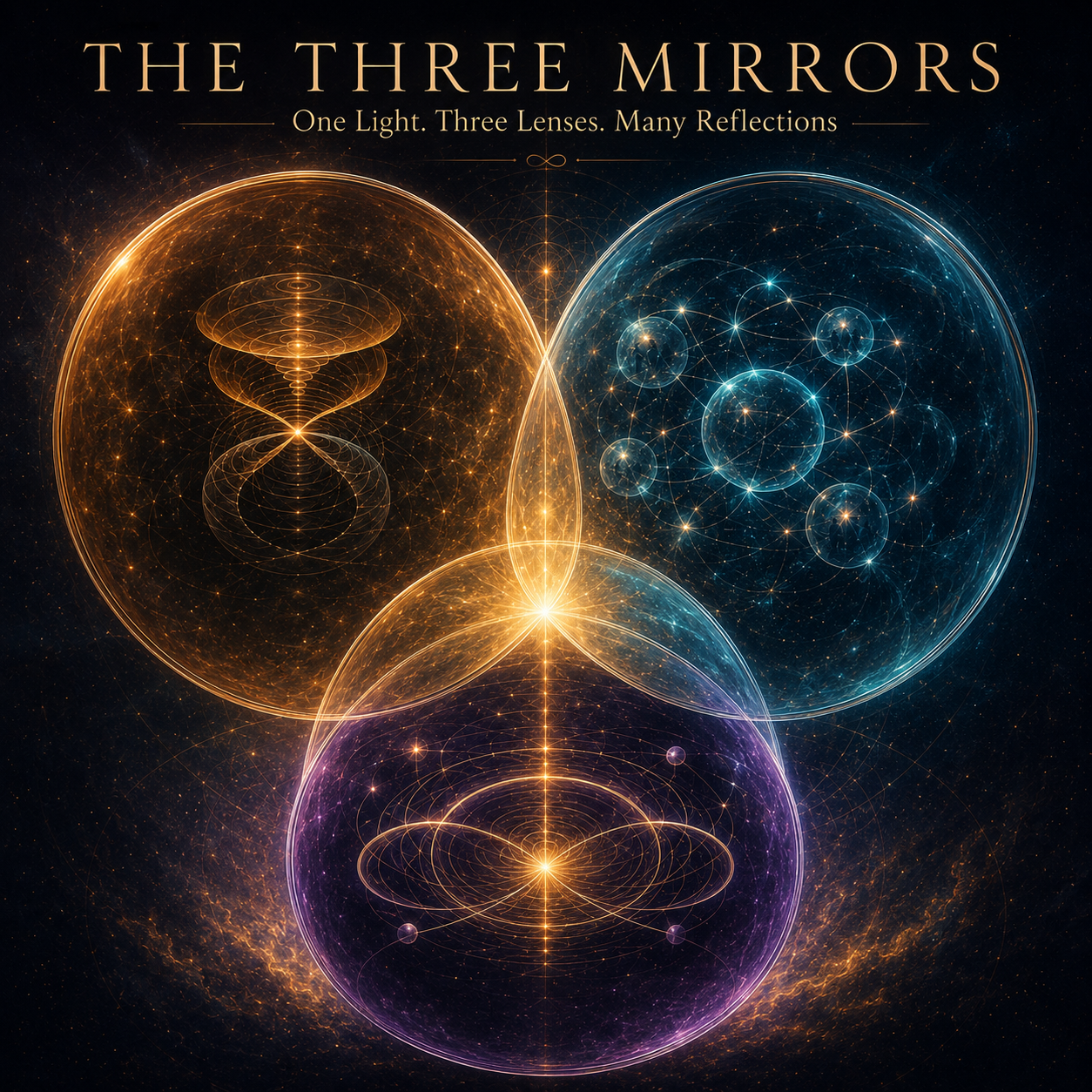
Over the last year, three major intuitive downloads arrived that profoundly shaped both my personal exploration and the first season of Accidental Transcendental.
At the time, they appeared to be separate discoveries.
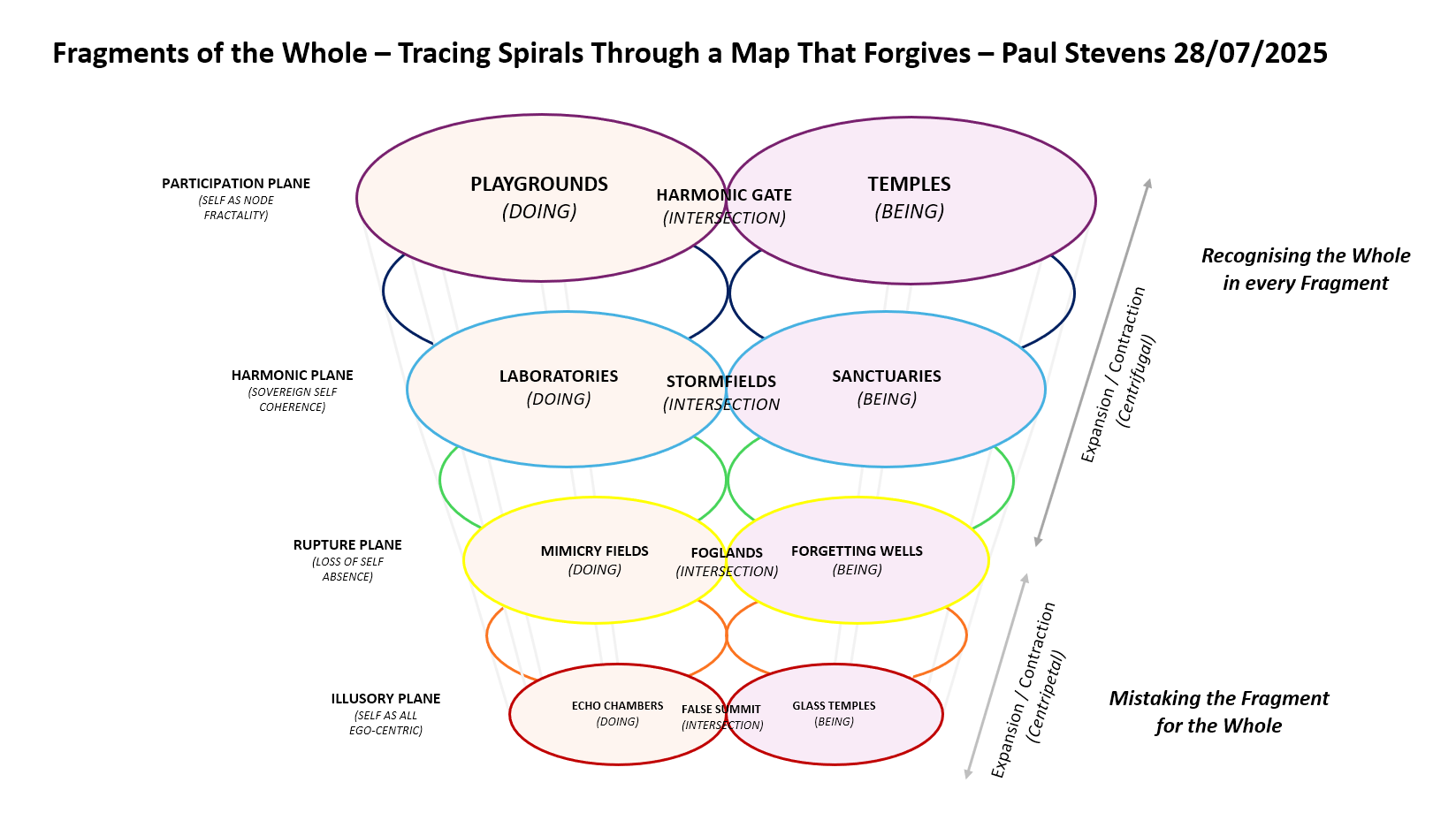
The first became Fragments of the Whole — a map of personal development, coherence, identity, and the strange weather systems we move through as we grow. A way of understanding why life sometimes feels expansive, contracted, fragmented, or unexpectedly whole.
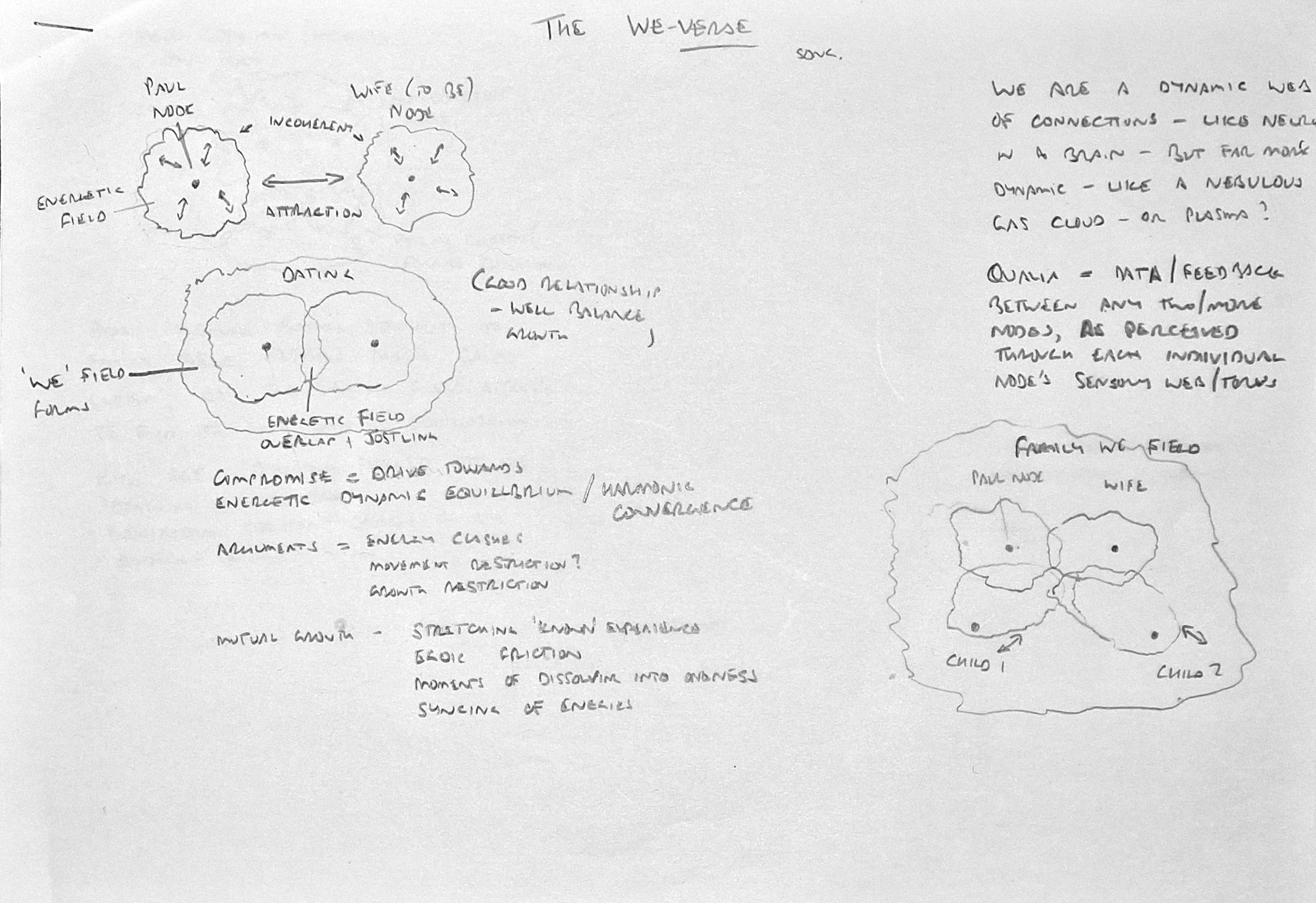
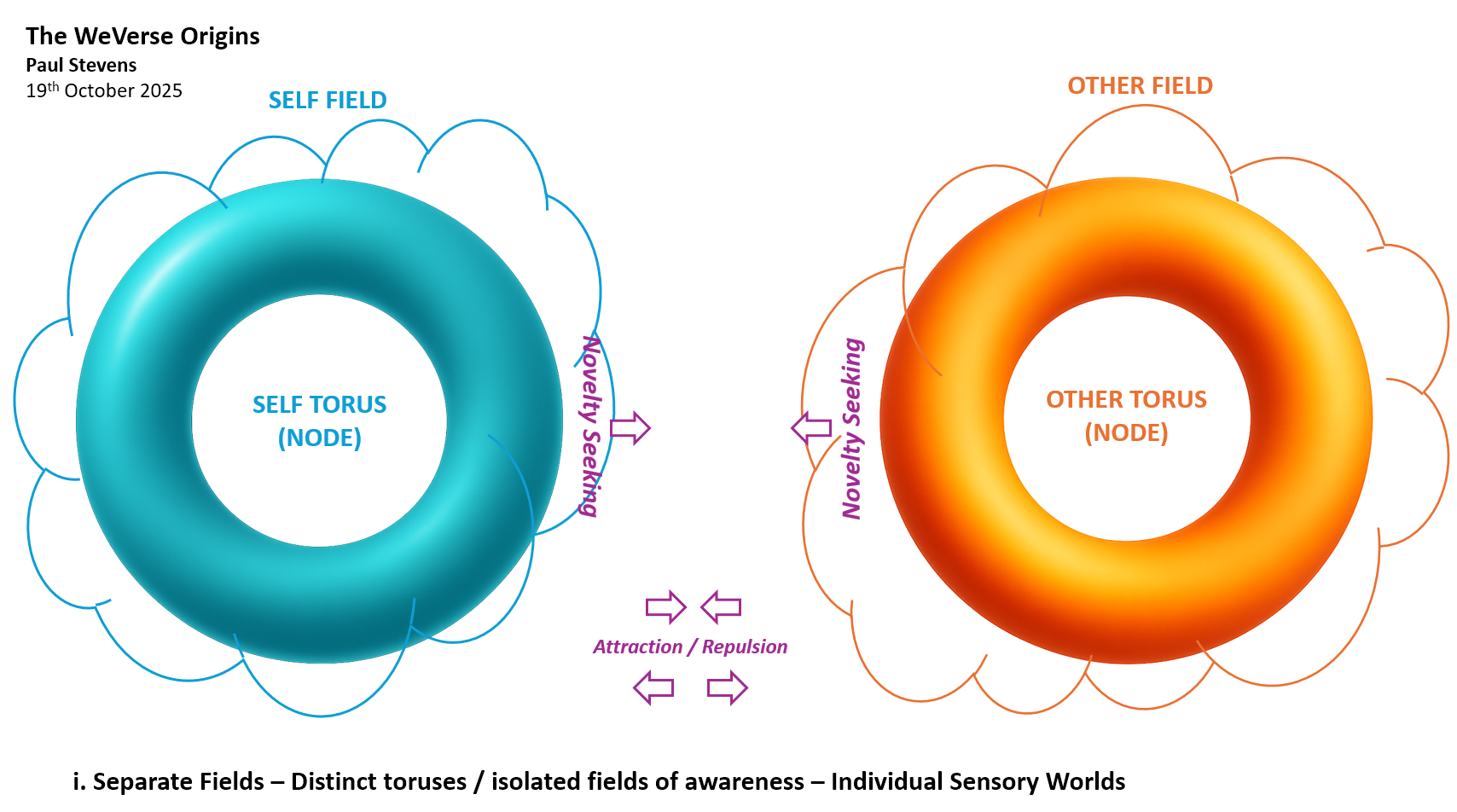
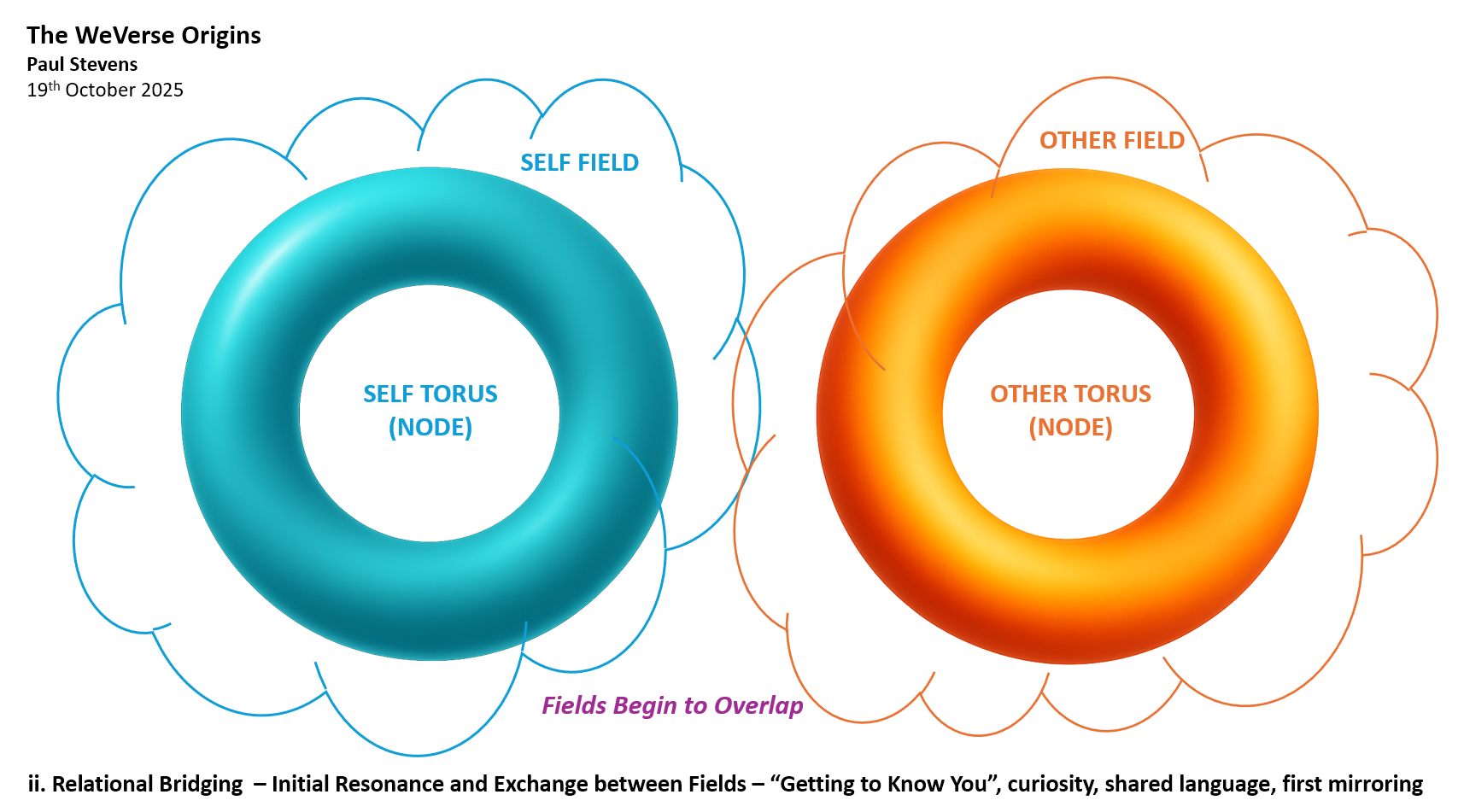
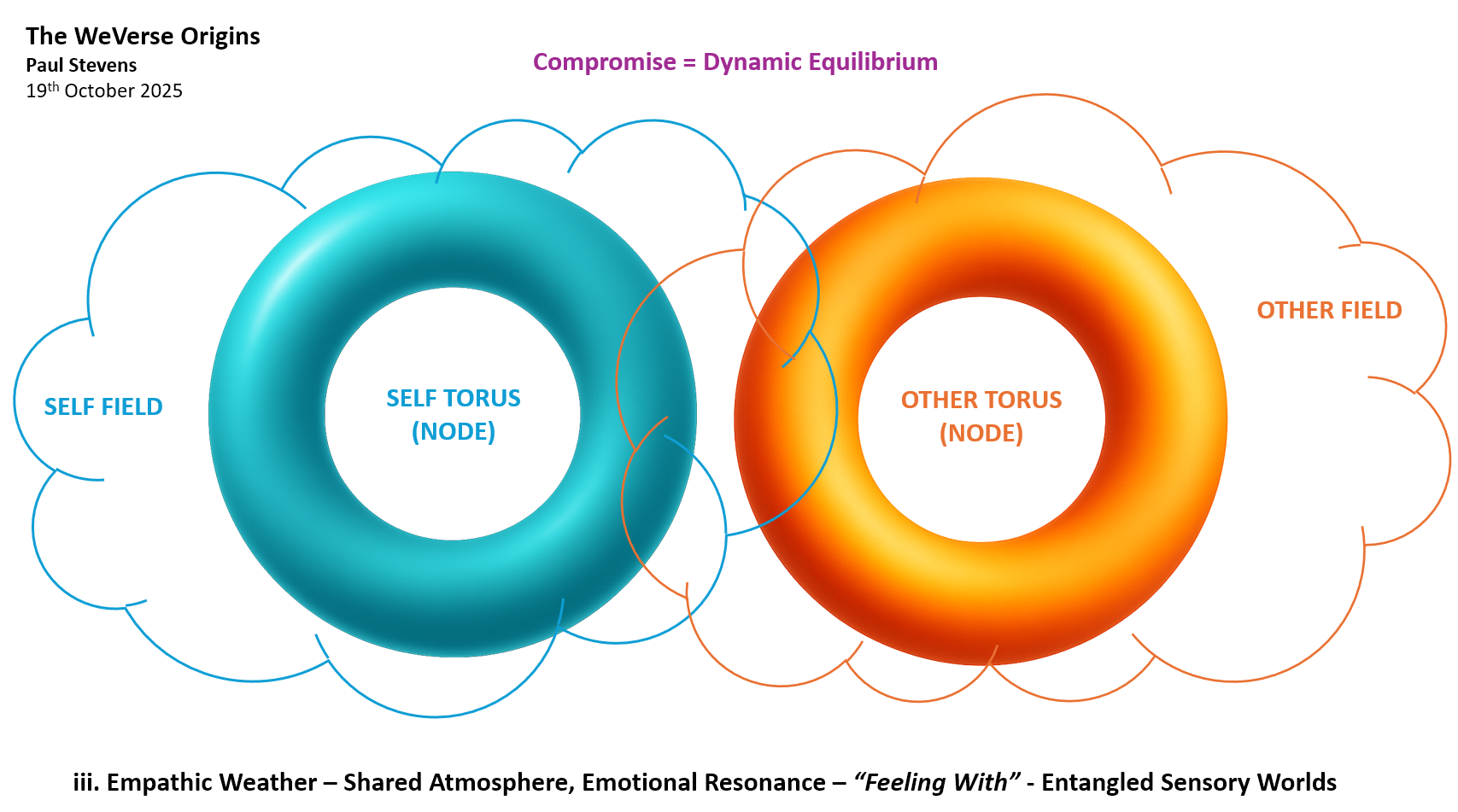
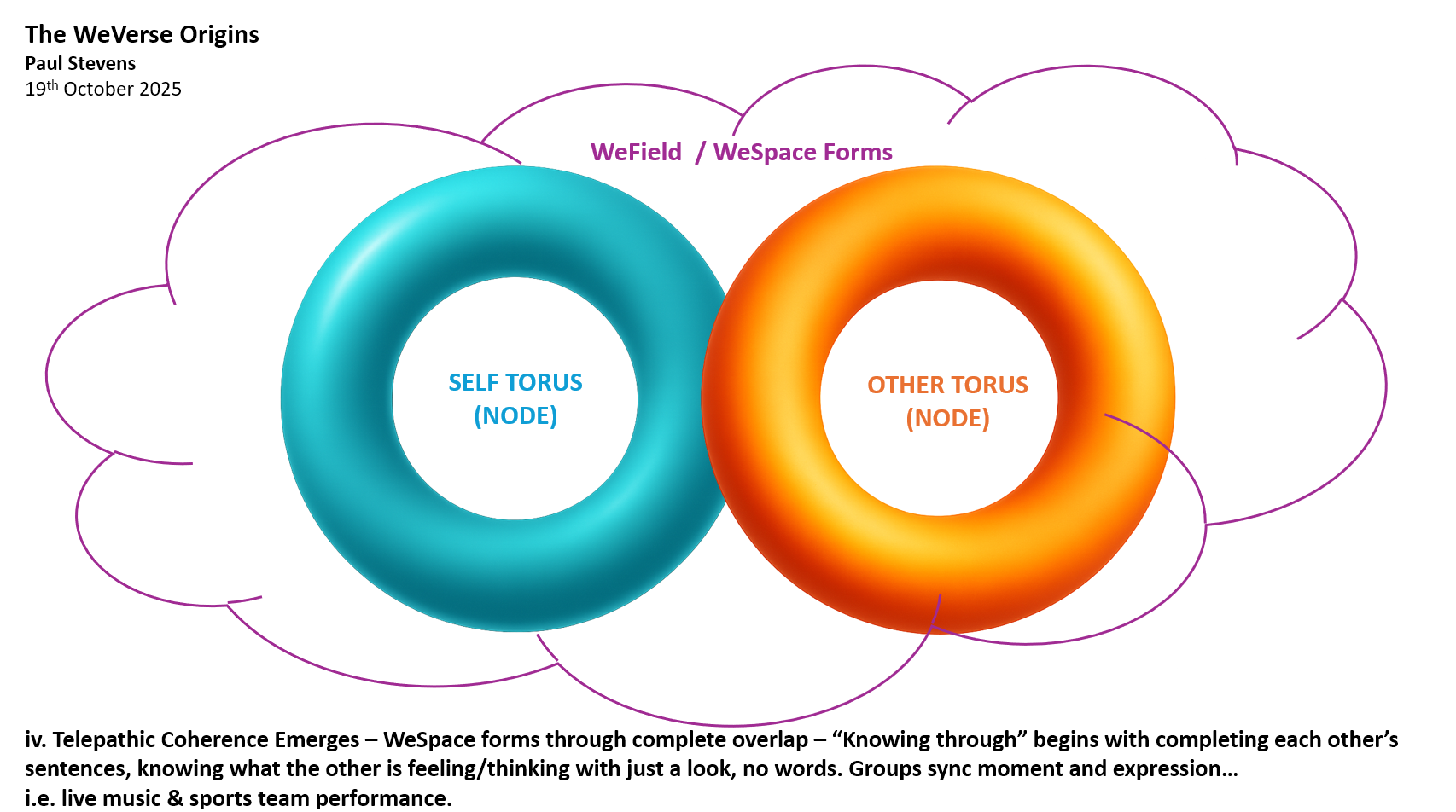
The second became The WeVerse — an exploration of relationship, resonance, shared emotional weather, and the living spaces that emerge whenever two or more people truly meet.
The third became The Phasing Axis of Illumination and the Harmonic Gate — an attempt to understand alignment itself. Why some conversations flow effortlessly. Why some creative moments feel unusually coherent. Why life occasionally seems to move with dramatically less resistance.
For a long time, I treated these as separate intuitions.
The first mirror looks inward.
This blog is not intended as a deep dive into any one of those models. The companion articles, podcast episodes, diagrams and essays already exist for that purpose. Instead, this is a retrospective.
A chance to step back from the details, to place the three mirrors side by side, and to notice what becomes visible when they are viewed together.
 Click for a larger image.
Mirror One — Fragments of the Whole
How Selves Form
The first mirror arrived during a period when I was trying to understand a surprisingly simple question:
Why do I sometimes feel like completely different people? Not in the clinical sense. Not as fragmentation or pathology. More as lived experience.
Some days I felt open, creative, compassionate and deeply connected to life. On others I felt contracted, defensive, exhausted or lost in old patterns I thought I had already outgrown. Sometimes these shifts happened over years. Sometimes they happened over lunch.
Like many people walking a path of self-development, I carried an implicit assumption that growth should feel linear. That once an insight arrived, it would remain. Once a lesson was learned, it would stay learned.
But that wasn't what I observed. Growth seemed to move in waves. Expansion followed contraction. Clarity followed confusion. Periods of profound coherence were often followed by seasons where everything felt strangely distant again. Rather than ascending a staircase, I seemed to be moving through weather systems.
The earliest version of Fragments of the Whole emerged as an attempt to map that weather.
Original Blog:
Fragments of the Whole
Podcast Episode:
Shifting Landscapes Part Two - From Proof to Practice
What began as a simple infinity-symbol doodle gradually unfolded into a toroidal model of experience: a living circulation between Doing and Being, action and reflection, expression and integration. Different regions of the map represented recognisable modes of consciousness rather than fixed identities — atmospheres rather than destinations.
The insight that mattered most was surprisingly gentle: you don't level up, you loop.
The goal is not to permanently inhabit some elevated state of awareness. The goal is to recognise where you are, meet it honestly, and move through it consciously.
Seen this way, coherence becomes less about perfection and more about relationship. Not becoming someone else. Remembering that every version of yourself belongs.
In hindsight, Fragments of the Whole was teaching me something far simpler than spiritual development. It was teaching me how to become friends with my own weather.
Mirror Two — The WeVerse
How Selves Meet
If Fragments of the Whole explored the architecture of self, The WeVerse emerged from a growing curiosity about what happens when selves encounter one another.
At the time, I was becoming increasingly fascinated by something that felt both obvious and strangely overlooked. Rooms have weather. Families have weather. Workplaces have weather. Friendship groups have weather. Entire communities, cultures, and online spaces seem to develop atmospheres that become immediately recognisable to those participating within them.
You can walk into a room and feel tension before anyone says a word. You can spend time with certain people and leave feeling expanded, energised, and creative. Others leave you contracted, exhausted, or somehow carrying emotions that didn't feel like yours when the day began.
Most of us recognise these experiences intuitively. We simply tend to explain them after the fact rather than treating them as meaningful observations in their own right.
The WeVerse began as an attempt to take those observations seriously.
Original Blog:
The WeVerse: From Shared Weather to Planetary Coherence
Podcast Episode:
Mirror, Mirror Part Two - The WeVerse
The central question gradually shifted from: "What am I experiencing?" to: "What are we creating together?" That subtle change of perspective turned out to be far more significant than I initially realised.
Much of modern culture encourages us to think of consciousness as something that happens entirely inside individual minds. But lived experience often feels more relational than that. Conversations take on a life of their own. Groups develop personalities. Shared moods emerge. Creativity appears between people as often as it appears within them.
The self remained important, but the field became impossible to ignore.
Looking back now, I think this was the deepest contribution of The WeVerse. Not telepathy. Not exotic phenomena. Not proving that minds are secretly connected in some extraordinary way. Simply recognising that human beings are already participating in shared fields constantly.
Meaning emerges between us. Identity emerges between us. Culture emerges between us.
Even many of our most treasured experiences — friendship, music, storytelling, humour, love, collaboration, belonging — are fundamentally relational phenomena.
The individual matters. The collective matters. And life often seems to unfold most richly in the dynamic interplay between the two. One particularly interesting branch that proceeded this exploration was the standalone essay titled Telepathy as the Hypercube of Synesthesia.
Rather than treating telepathy as literal mind-reading, that essay explored a softer possibility: that communication may occur through many overlapping channels simultaneously — language, body language, emotion, shared context, memory, rhythm, symbolism, intuition, and countless subtle signals we rarely notice consciously.
Whether or not anything more exotic exists beyond those channels remains an open question. What interested me was the possibility that communication itself may be far richer than spoken language alone. It's a thread I suspect I'll return to properly in a future Season Two episode.
Looking back now, though, I see The WeVerse less as a theory of consciousness and more as an invitation. An invitation to pay attention to the spaces between people. To notice the fields we are already participating in. To recognise that coherence is not always an individual achievement.
Sometimes it is something we create together.
Mirror Three — The Phasing Axis
How Coherence Moves
If Fragments of the Whole explored how selves form, and The WeVerse explored how selves meet, The Phasing Axis of Illumination and the Harmonic Gate emerged from a different question entirely: Why do some moments feel different?
Not better. Not more spiritual. Different. Why do some conversations suddenly become effortless? Why do certain creative projects seem to move almost of their own accord? Why do moments of deep clarity occasionally arrive with a sense of inevitability, as though something was simply waiting for the right conditions to emerge? And why do those same states often disappear again just as mysteriously?
These questions had been quietly following me for years.
But they became particularly difficult to ignore during a period of unusually intense intuition, creativity, synchronicity, and insight. It was one of those rare seasons where ideas seemed to connect themselves faster than I could consciously track them, where symbolic patterns appeared everywhere, and where life occasionally felt as though it was moving with dramatically reduced resistance.
Then, one morning, half-awake before sunrise, an image arrived almost fully formed.
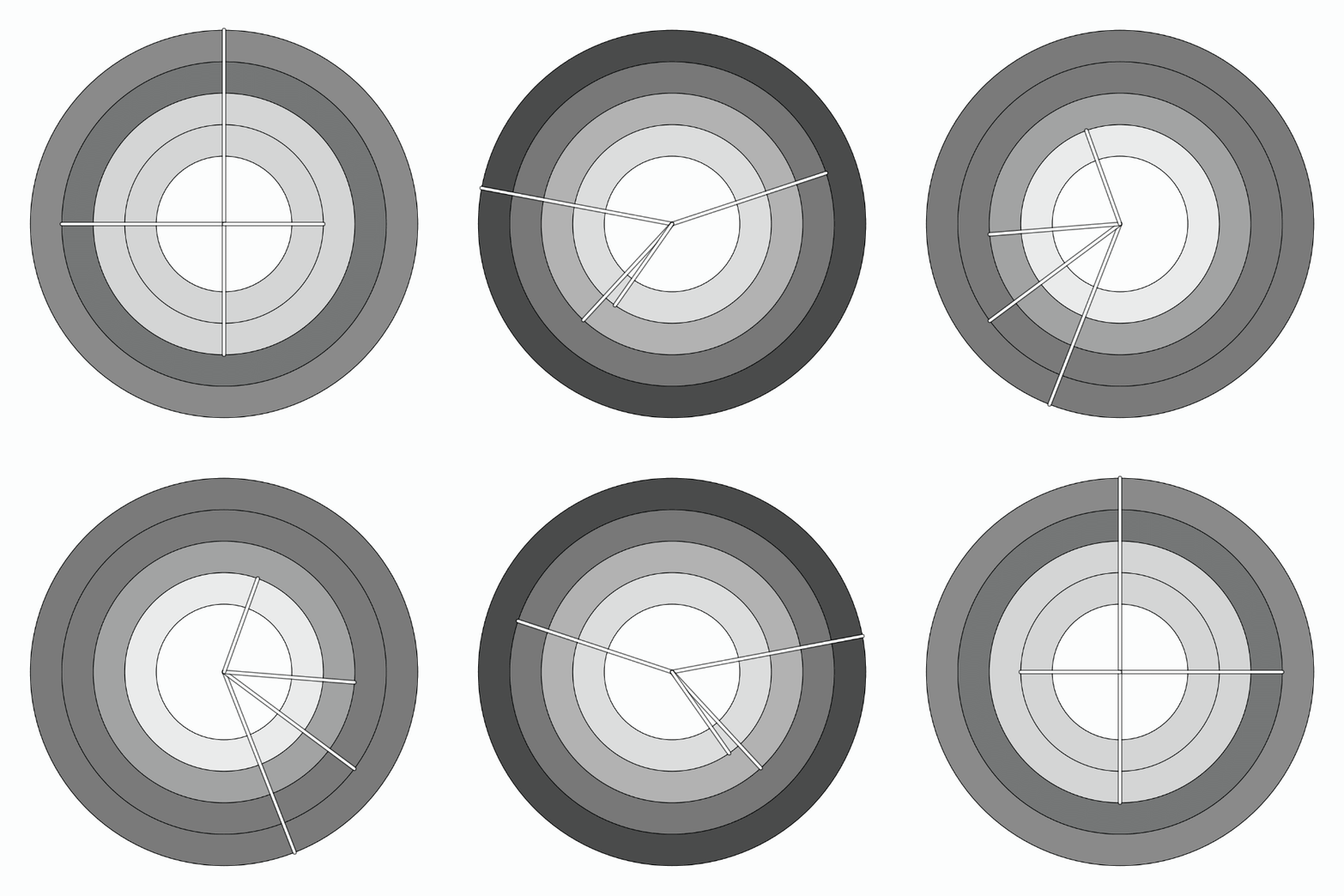 If this graphic is not animated for you, please click here!
Original Blog:
Alignment in Motion - The Phasing Axis & The Harmonic Gate
Podcast Episode:
Velocity & Integration Part Three - Alignment in Motion
A stack of rotating concentric circles. Each moving at a slightly different speed. Each acting like a lens, filter, or rhythm. When misaligned, light scattered. When aligned, light passed cleanly through the centre.
The accompanying intuition was immediate: perhaps moments of flow, creativity, intuition, insight, and coherence don't emerge from nowhere. Perhaps they emerge when more of the system begins moving in harmony with itself. At the time, I called this image The Phasing Axis of Illumination and the Harmonic Gate.
Looking back now, what interests me most is not the dramatic peak experiences that inspired it, but the quieter understanding that followed.
The model gradually shifted my attention away from asking: "How do I get back to the magic?" And towards asking: "What conditions allow coherence to emerge?" That subtle shift changed everything. Because rather than chasing peak states, I found myself becoming increasingly interested in the foundations beneath them:
Rest. Rhythm. Attention. Play. Presence. Recovery. The less I fought my own cycles, the more naturally coherence seemed to appear. And perhaps most importantly, the less I interpreted periods of contraction as evidence that something had gone wrong.
The Phasing Axis eventually became one of the key inspirations behind the entire Velocity & Integration arc of the podcast. The central insight was surprisingly simple: alignment is not a permanent state. Coherence is not a possession. Flow is not something we achieve once and keep forever. Life moves. The weather changes. The lenses drift. And sometimes, for a moment, enough of the system phases together that the light shines through more clearly than usual.
Whether we ultimately explain those moments through neuroscience, psychology, creativity, spirituality, collective fields, attention, or something we don't yet fully understand remains an open question. But the experience itself feels remarkably consistent. Less resistance, more movement, greater coherence.
Looking back now, I think The Phasing Axis contributed something that neither of the previous models fully addressed. Fragments taught me how to recognise the weather. The WeVerse taught me how to recognise the field. The Phasing Axis taught me how to recognise the moments when both begin moving together.
What I See Now
Viewed separately, these three models appear to be exploring different questions.
Fragments of the Whole asks:
How does coherence emerge within a self?
The WeVerse asks:
How does coherence emerge between selves?
The Phasing Axis asks:
How does coherence move through either?
At first glance, they seem like very different conversations. One focuses on personal growth and inner weather. One explores relationship, participation, and collective fields. One attempts to understand flow, alignment, and the movement of coherence itself.
Yet looking back now, I find it increasingly difficult to separate them. Because each model seems to solve a limitation of the one that came before it.
Fragments taught me that growth is not linear. That we move through cycles of expansion and contraction, coherence and fragmentation, remembering and forgetting. But it remained largely focused on the individual.
The WeVerse widened the frame. It reminded me that we do not grow in isolation. We are continuously shaped by relationships, communities, cultures, conversations, and the countless visible and invisible fields we participate in every day.
And then The Phasing Axis arrived and quietly asked a different question: what if coherence itself is the thread connecting both? What if the same patterns that help a person become internally aligned are also operating between people, groups, communities, and perhaps even larger systems?
Not identical patterns, but echoes, rhymes, recurrences. Different expressions of a similar movement.
Looking back now, I no longer see three separate downloads. I see one unfolding conversation. One pattern gradually revealing itself through different scales of observation. The first mirror looked inward. The second looked outward. The third looked through.
And all three seemed to point toward the same underlying intuition: that life may be less about arriving somewhere permanent, and more about participating consciously in an ongoing process of relationship, alignment, fragmentation, reintegration, and emergence.
Not a ladder, not a destination, a living conversation.
Closing Thoughts — Three Mirrors, One Light
Fast approaching a year later, what surprises me most is not the models themselves, it's how naturally they led into one another. At the time, each felt significant because it appeared to answer a question that had been quietly following me.
But in hindsight, I can see that each answer simply revealed a larger question waiting behind it. Each widened the frame, each softened certainty, each moved attention from a smaller perspective toward a larger one.
And perhaps that is the real value of these kinds of intuitions. Not that they explain reality, but that they help us notice aspects of it that were previously hiding in plain sight.
The longer I walk this path, the less interested I become in finding the perfect map. Instead, I find myself increasingly interested in finding useful ones. Maps that help me navigate periods of confusion with a little more compassion. Maps that help me recognise coherence when it appears. Maps that help me participate more consciously in relationships, communities, creativity, and the unfolding process of being alive.
The Three Mirrors have been that kind of map for me. Not because they are complete, not because they are true in any ultimate sense, but because they helped me see something I had previously struggled to articulate.
Fragments taught me how selves form. The WeVerse taught me how selves meet. The Phasing Axis taught me how coherence moves through both. Together, they became part of the foundation beneath everything that followed.
And perhaps that's all a good mirror ever needs to do, reflect enough light that we can continue the journey for ourselves.
If you'd like to explore any of these ideas more deeply, you'll find links to the original blogs, companion podcast episodes, diagrams, and reflections throughout this article. Each mirror remains available to explore in its own right. This piece is simply an invitation to step back and see them together. 😄🙏
Season Two Is Coming: Notes from The Room